Technical Game Designer
Gameplay Systems · Game AI · Tools
Kenechukwu Umelo
Game Jams
As a designer and programmer, I think highly of game jams. They’re a good way learn, collaborate, and stretch your skillset a bit. The final product is very rewarding at times, and they teach me so much. Each game below carries significance to my journey and lessons that made me a better developer.
Dungeon Divers (2023)
Jam: Brackey's Game Jam 2023.2
Role: Game Programmer
Time of Development: 1 Week
Team Size: 6
Engine/Tools:

Game Overview:
Dungeon Divers is an endless, top-down 2.5D shooter where players fight through layered encounters against multiple enemy archetypes to earn keys that unlock stat upgrades, allowing progression across runs.
The catch? The enemy's difficulty increases with every level.
I focused on spawning systems, enemy AI, and dynamic tutorials.
Contributions


Level Spawning Systems
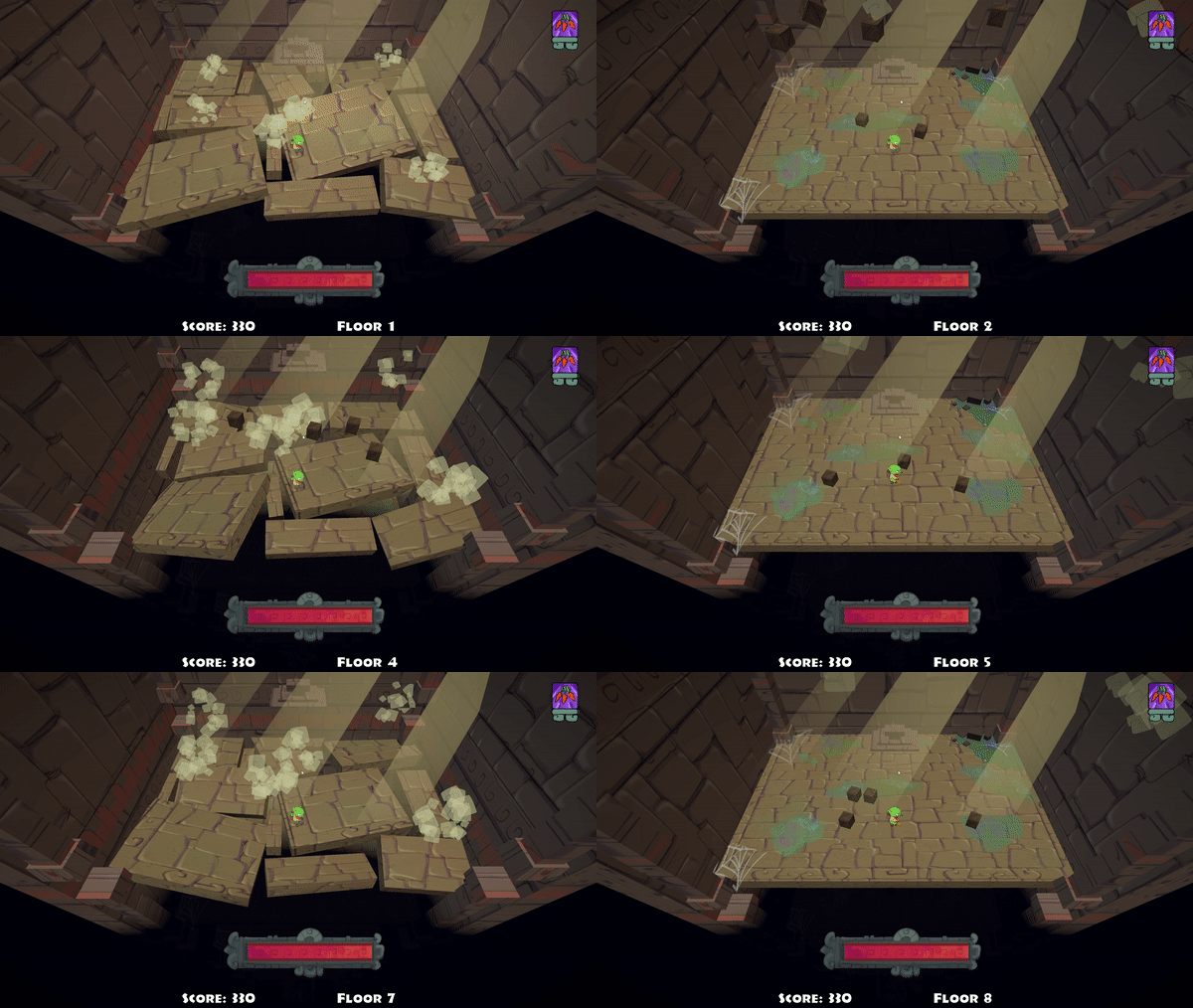
I implemented a simple generator that creates a new floor when the player destroys a level. Testing with the team, I ensure that the system can withstand potential button spamming of new floors.
How could I have improved it?
A pooling method would've been a better-performant approach for the game, rather than destroying the floor at runtime.
Enemy AI and Spawning
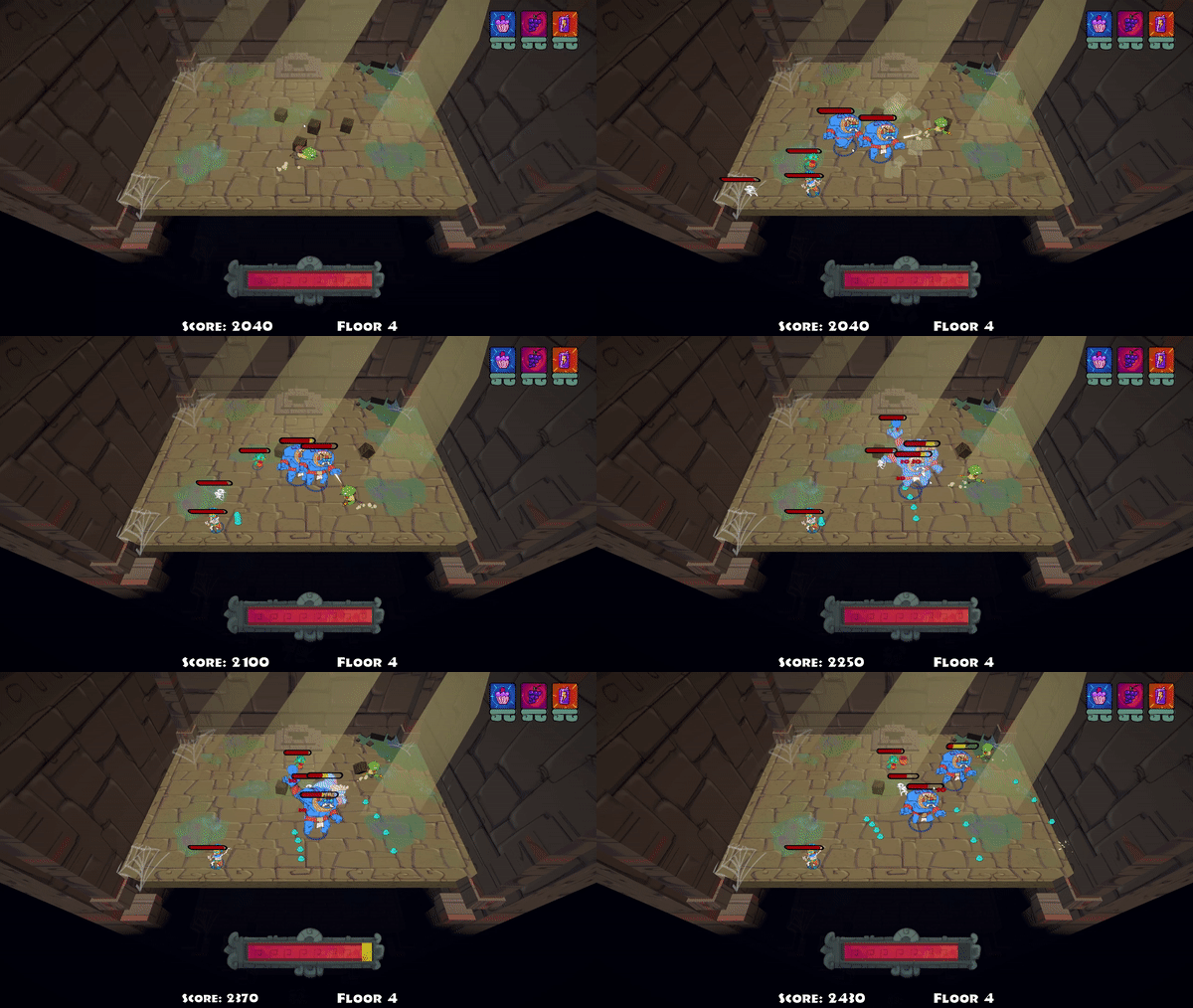
Implemented a spawning system to handle enemy spawning, key placement, and property values for difficulty scaling. I opened up several float variables for designers and artists to tweak and test throughout the development cycle.
For the enemy AI, I scripted all the movement behaviors and several types of weapon bullets for them to wield. The enemies were designed to offer players surprise mixed encounters at each level, preventing them from becoming stagnant and predictable.
Tutorial
Near submission time, I quickly implemented a dynamic text-based tutorial on the first floor to guide players through the game. The intention was to bring players up to speed on how to play without requiring additional menus or panels.

Restless (2023)

Jam: Pixel Game Jam 2023
Role: Game Programmer
Time of Development: 1 Week
Team Size: 3
Engine/Tools:
Game Overview:
Restless is a 2D Horror Narrative Exploration where players explore up and down the halls of a house during a dream sequence.
I focused on interactive objects and narrative scripting.
Contributions
Interactive Objects
I scripted each object in the house with a dialogue string input to deliver to the dialogue manager to display. My goal was establish the storytelling for the area that the player is roaming. My partner (for the jam) and I were able to add lines to several different objects in the house scene without too much haste or coding.
Player interacting with Dialogue Prompting Objects
Narrative Scripting
I added simple event trigger volumes to the areas in the rooms that players will run into, which triggered cutscenes, noises, or objects that needed to auto-animate. This was done to bring out the horror elements in a way that will surprise players. Here are some examples:
Doors automatically animate when the player enters the section
Player entering the cutscene trigger
Dialogue swap event switching lines from previous interaction

Won "Best Illustration of Impact on the Built Environment"
_JPG.jpg)
Hackathon: 2019 Yale Climate Change Hackathon
Role: Game Programmer/QA
Time of Development: 24 Hours
Team Size: 6
Engine/Tools:
Game Overview:
Eroglution is a virtual reality simulation that tackles climate change and CO2. The experience aims to be a fun illustration of how planting trees around the town reduces urban heat and surface temperatures.
Contributions
Integrating SteamVR and Learning How To Use VR
Given the short time, I learned how to use an HTC Vive headset and controllers and how to integrate the SteamVR plugin to allow the headset to run in Unity. I implemented movement and button-press inputs, which other programmers used as the main base to implement other interactions in the game.
Player placing down trees around the enviornment
Quality Assurance Testing
After SteamVR was integrated into the project, I took on playtesting the experience from beginning to end. This included repeatedly wearing the HTC Vive headset during the final six hours of development during the hackathon.
Reflection
This hackathon was the first time I worked with virtual reality. I easily adapted to the tools and software needed to get the project going from early on, which helped the team focus specifically on implementation. I then focused on ensuring a quality and polished experience, which led to a good presentation when the game was showcased to judges.
During the development, an unfortunate incident caused us to move our projects to Yale's provided desktops (hence why the project cannot be publicly seen). I learned that VR game development required a more VR-ready PC or laptop to handle the technical expense, so I acquired one afterward.

